I. Introduction
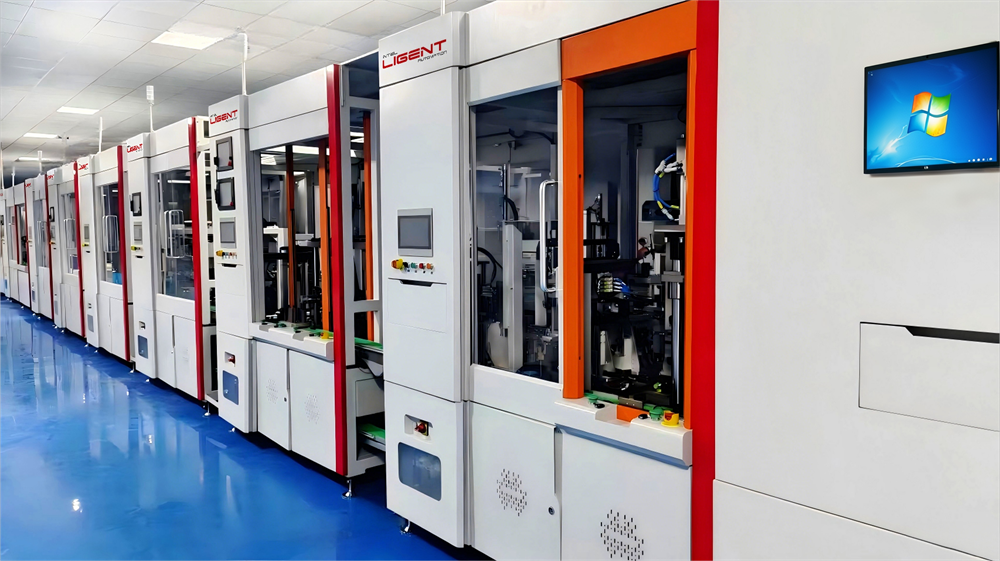
The CDC solenoid valve is the core actuator component of the wire-controlled suspension, directly influencing the vehicle's shock absorption response and driving safety. With the rapid popularization of intelligent chassis and wire-controlled technology in the new energy vehicle sector, the industry's demands for the assembly consistency, sealing performance, and stability of solenoid valves continue to rise.
Facing the mass production of next-generation intelligent chassis, the industry presents two major trends: on the one hand, under the IATF16949 automotive quality management system, single-product full-chain traceability and process quantification monitoring have become mandatory thresholds; on the other hand, product iteration is accelerating, and multi-specification co-production, rapid model change, and cost reduction and efficiency improvement have become core demands for enterprises.
However, this type of valve component consists of dozens of parts, posing significant challenges for mass production: the assembly process is complex, with numerous small parts prone to errors, stringent quality standards, and considerable room for improvement in key indicator retention and fault tracing.
In response to industry demands, Lijiede (Suzhou) Automation Co., Ltd. has developed a fully automated assembly and testing line for external CDC solenoid valves, leveraging the core technological characteristics of these valves. This line covers the entire production cycle, from component loading, multi-process assembly, performance testing, to finished product palletizing and unloading. Real-time data recording and archiving provide robust data support for enterprise production.
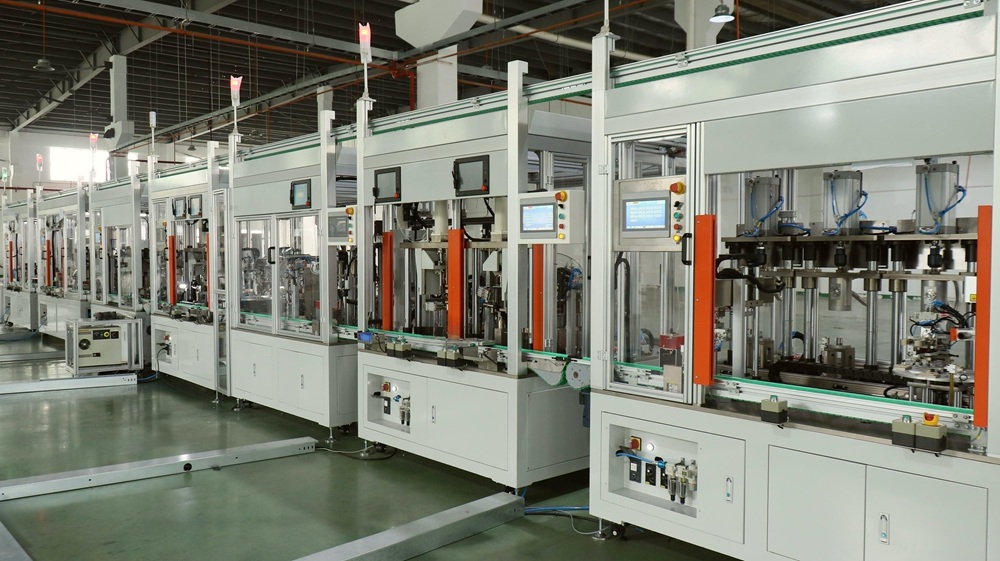
The entire line is composed of nine process units connected in series:
OP10 Helium inspection of magnetic isolation sleeve & automatic assembly of Teflon film → OP20 Inspection of moving iron assembly and press fitting of shaft sleeve → OP30 Assembly of magnetic isolation sleeve components, spring assembly and press fitting → OP40 Power-on running-in + electromagnetic force performance test → OP50 Automatic assembly, riveting and inspection of plunger assembly → OP60 Tightening of upper and lower magnetic isolation sleeves → OP70 Assembly of valve body and servo riveting → OP80 Assembly and tightening of valve core and valve body → OP100 Assembly of O-rings and cutting of finished product disc.
II. Highlights of core process unit engineering
OP10 Helium inspection of magnetic isolation sleeves and automatic assembly of Teflon film (human-machine collaborative workstation)
As the first quality checkpoint in the production line, the equipment automatically completes helium mass spectrometer leak detection, internal wall oil spraying, automatic assembly of Teflon film for anti-static purposes, and visual roundness inspection.
Helium inspection strictly controls pressure, leakage, and vacuum indicators, relying on calibration buckets to ensure measurement GRR < 20%, and outputs trend charts to predict batch anomalies. Teflon film achieves full automation of feeding, rounding, assembly, shaping, and inspection to prevent over-packing and missing items. The dual-claw transfer mechanism for parallel feeding and unloading improves efficiency, and defective products are placed in locked NG bins.
OP20: Detection of moving iron assembly, servo press fitting of moving iron seat shaft sleeve
The core workstation ensuring the operational performance of solenoid valves. Conduct multiple inspections on the moving iron assembly, including height, backlash, and coaxiality, with a detection accuracy of 0.002mm, and screen out workpieces with welding defects.
Record the pressure-displacement curve throughout the servo press fitting process of the moving iron seat and shaft sleeve, visually identify the front and back of the shaft sleeve, and re-measure the coaxiality after press fitting; automatically sort defective parts, and bind key data to QR codes for archiving.
OP30 Assembly of magnetic isolation sleeve, moving iron, and spring assembly
Focusing on the risk of unstable incoming spring materials, stiffness testing is conducted on the upper and lower springs after loading to eliminate unqualified springs. The robotic arm completes the component flipping and assembly, and the servo press fits collect pressure displacement. The press is lowered by 0.5mm to collect force values and perform secondary sampling to obtain the average value. The press fitting fixture automatically removes dust to avoid damage to moving parts caused by impurities and performance loss due to residuals inside the valve body.
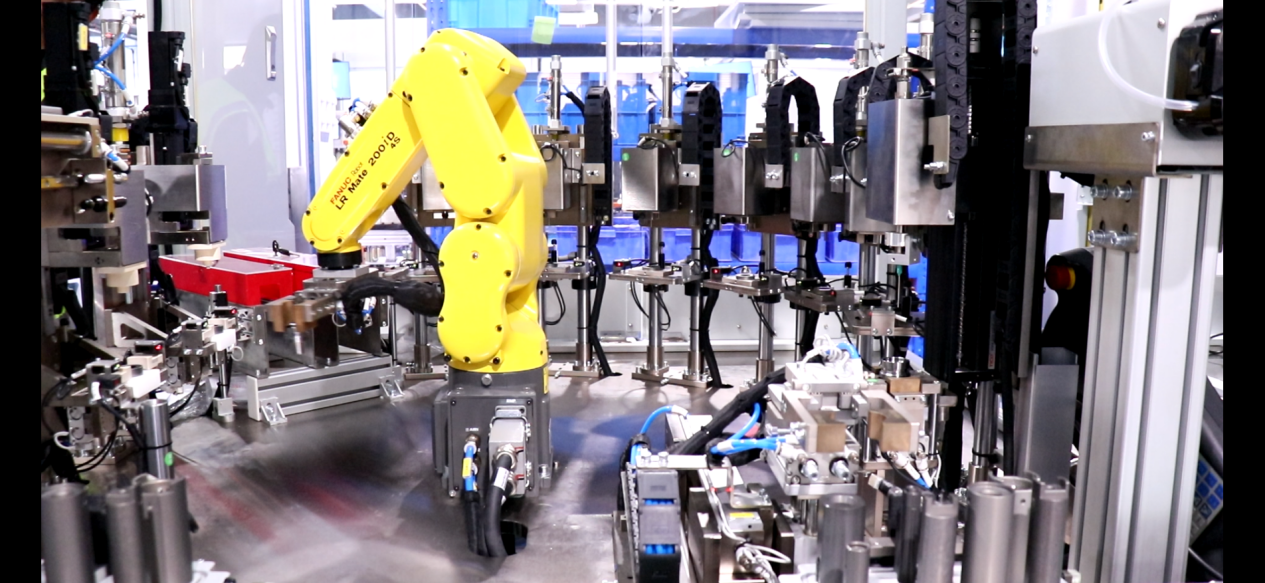
OP40 power-on running-in + electromagnetic force EOL performance test
The offline key performance testing station. After the workpiece is oiled, it enters the rotary mechanism and can undergo up to 3000 cycles of power-on running-in. The voltage and current, power supply specifications, and testing frequency can all be adjusted.
After the break-in period, the electromagnetic force detection is completed. The sensor collects the force value curve and outputs an analysis chart. The six-axis robot transfers the workpieces, directly rejecting the performance NG pieces, and the qualified products flow into the next process.
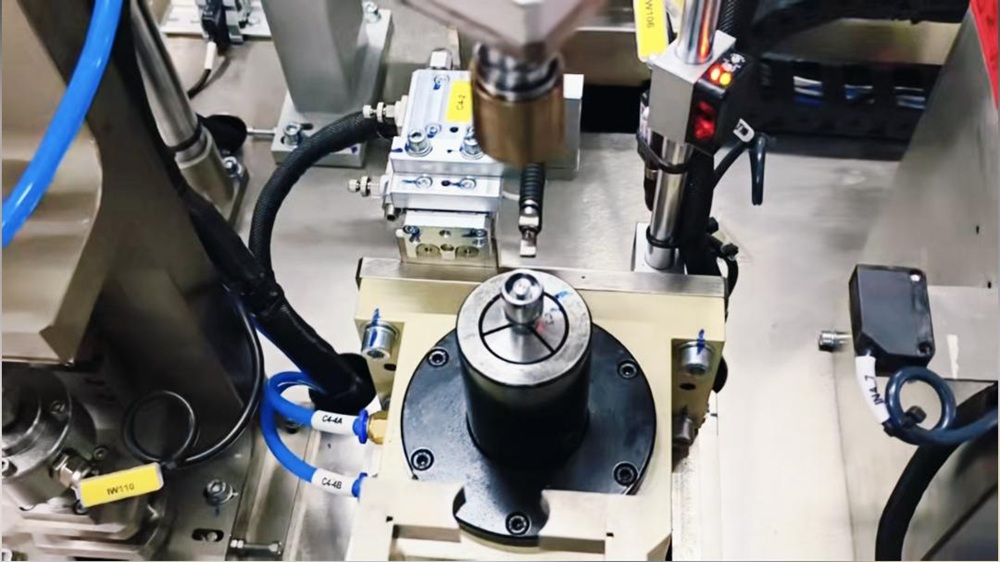
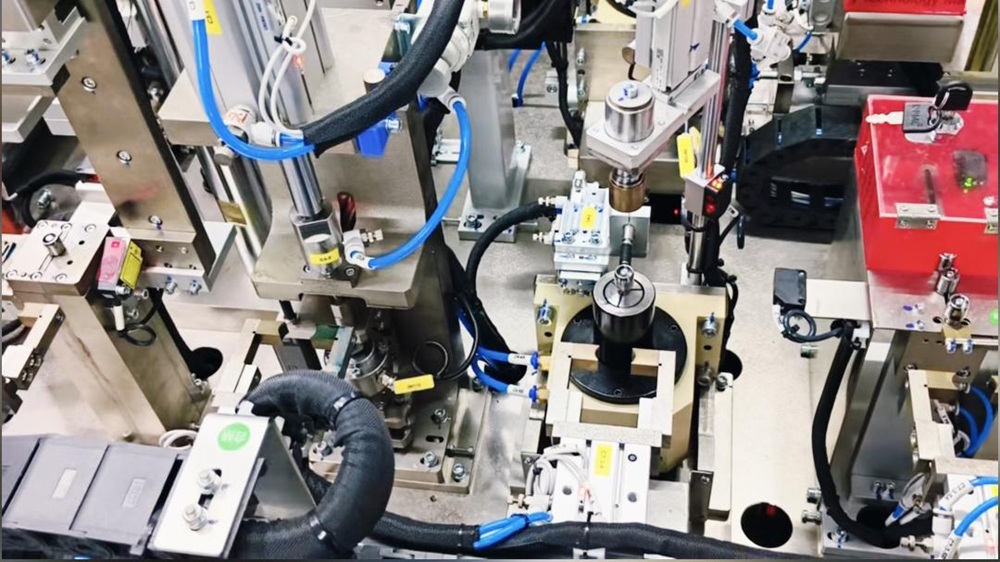
OP50 ejector assembly turntable assembly, riveting, and airtightness testing
Relying on an 8-station turntable, fully automated assembly of the thimble seat, valve plate, and thimble cover is completed. Components are automatically fed, and a 2T electric cylinder performs 10000N servo riveting, with the entire process monitoring the press-fit curve and simultaneously cleaning the fixture and workpiece.
After riveting, flow airtightness and height clearance tests are conducted to identify missing gasket issues. Good products are automatically fed to the main line, while defective products are automatically removed, eliminating the need for manual quality assessment.
OP60|OP80 tightening process: torque-angle closed-loop monitoring
Both workstations are equipped with Atlas tightening guns, with dual monitoring of torque and angle, to avoid false tightening and over-tightening.
OP60 tighten the magnetic isolation sleeve (15-20Nm), use a three-claw clamping tool for internal filling protection to prevent deformation of the thin-walled shell due to pressure, and recheck the height after tightening.
The tightening torque for OP80 valve body assembly is 20Nm; before assembly, visually inspect the sealing ring, and adaptively select valve plate gaskets based on the measured height to solve the problem of part size dispersion.
OP70 valve body assembly servo riveting multi-dimensional inspection
The valve body structure is complex, so the stiffness of the restoring spring should be tested before assembly; multiple sets of valve plates are assembled in batches, and height detection is used to identify incorrect or missing assembly.
The 2T servo electric cylinder completes the valve rod riveting, and collects spring force data before and after riveting. Multi-point sampling is used to detect the flatness of the spring seat and the height difference with the valve body. The workstation is equipped with dust removal to prevent metal debris from causing blockage in the valve body cavity.
OP100 O-ring assembly and robotic plate arrangement and feeding
The finished product station at the end of the production line. The workpiece undergoes automatic degreasing and valve body greasing, while the vibration feeder completes the loading and assembly of O-rings, with visual verification of the assembly status. A six-axis robot grasps the finished products and automatically places them on a tray for discharge, reducing manual contact.
III. Full-chain error prevention, traceability, and MES digitalization capabilities
In accordance with the requirements of the IATF16949 system for automotive components, a multi-tiered quality assurance system has been established for the entire production line:
1. Multi-dimensional error prevention mechanism
In-place detection of sensors, light curtain safety protection; visual inspection of parts presence/orientation; servo press fitting pressure-displacement curve determination; tightening torque angle monitoring; helium detection, force value, and airtight performance result determination; all defective products are placed into a locked enclosed NG box, with a full-capacity reminder.
2. Full-process data traceability
The QR code of the product's magnetic isolation sleeve serves as a medium, linking each process and test data at each station. By scanning the QR code of the incoming component batch, the material batch can be correlated with the product assembly, enabling reverse material tracing in case of quality issues.
3. Deep integration with MES system
- Receive work orders, routing plans, and BOM materials issued by ERP;
- The production line provides real-time feedback on production quantity, process progress, and defect records; supports scheduled synchronization of production data;
- The upper computer aggregates data from the entire production line and displays it visually on the electronic board; it outputs raw records in database/CSV format and provides a complete data dictionary to meet the audit requirements of the main manufacturer.
IV. Summary
In the automation of automotive safety components, equipment is not merely a set of production tools for assembly, but also an online quality engineering system. This solenoid valve production line shifts the quality control process, which was originally reliant on finished product sampling inspection and laboratory verification, to the various assembly stations, enabling on-site interception of defects and preventing their flow to the finished product. Essentially, it involves shifting risks upstream and visualizing issues.
This is also the underlying logic behind a series of indicators in the automotive industry: the true value of automated production lines lies not only in improving efficiency and increasing production, but also in transforming implicit process experience into reproducible, traceable, and revisable standardized capabilities. When problems occur, we don't need to guess where the mistake lies; data will tell us the answer. For manufacturing enterprises, this set of accumulated process and data assets is even more precious than the equipment hardware itself.



 +86 13706669790 18051121871
 xiangdao@szligent.com
 Building 1, Yangshan Technology Industrial Park, No. 8 Jinyan Road, Gaoxin District, Suzhou City, Jiangsu Province

